
Why Experience Matters
Airline personnel know what passengers should be told, but communicating those instructions in a "primarily pictorial" way is not as simple as it may seem—even for a skilled designer.
Most graphic artists have no training in information graphics, and almost none have refined their work through comprehension testing, as we have. Would your local graphic designer research aviation accidents and stay informed of FAA and industry safety recommendations in order to know what to include on a safety card? Not likely. You will have to take time to guide everything they do.
The examples below illustrate some of the mistakes less experienced designers often make. These instructions have been authorized by airlines and approved by inspectors, yet may still be harmful to passengers
On this page:
Floorplan vs. Cutaway • Simple vs. Complex • Showing the Passenger • Mixed Messages • Viewing Angle • Seatbelts & Turbulence • Carry-Ons • Further Reading • Client Testimonials
Floorplan vs. Cutaway
In an early study of safety card instructions, human factors researchers Dr. H.B. Altman and Dr. D.A. Johnson found that test subjects preferred a realistic cutaway view over a floor plan when locating exits. Some passengers also misinterpret floor plans, viewing them as the underside of the aircraft rather than from above. This can be dangerous when exits are located differently on each side of the aircraft.
For land evacuations, we use grass-colored backgrounds; for ditching, water-colored backgrounds. Because exits may be blocked, inoperable, or overcrowded, we use continuous arrows that guide passengers to available exits and continue beyond the aircraft to guide passengers to a safe area after evacuation.
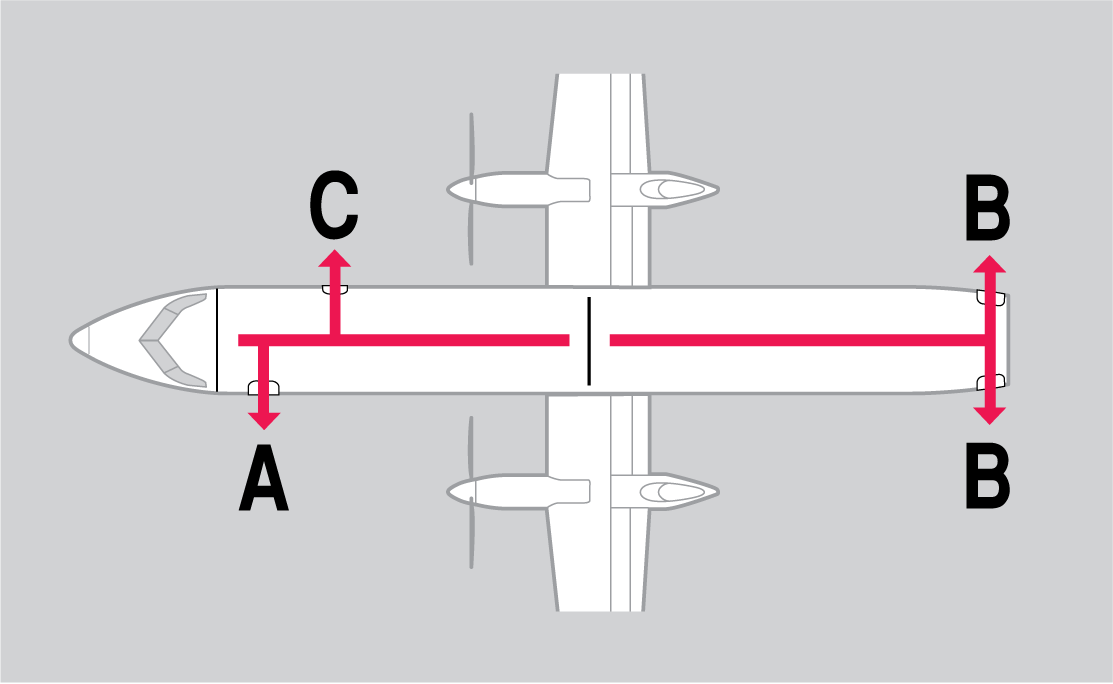
A Less Experienced Designer
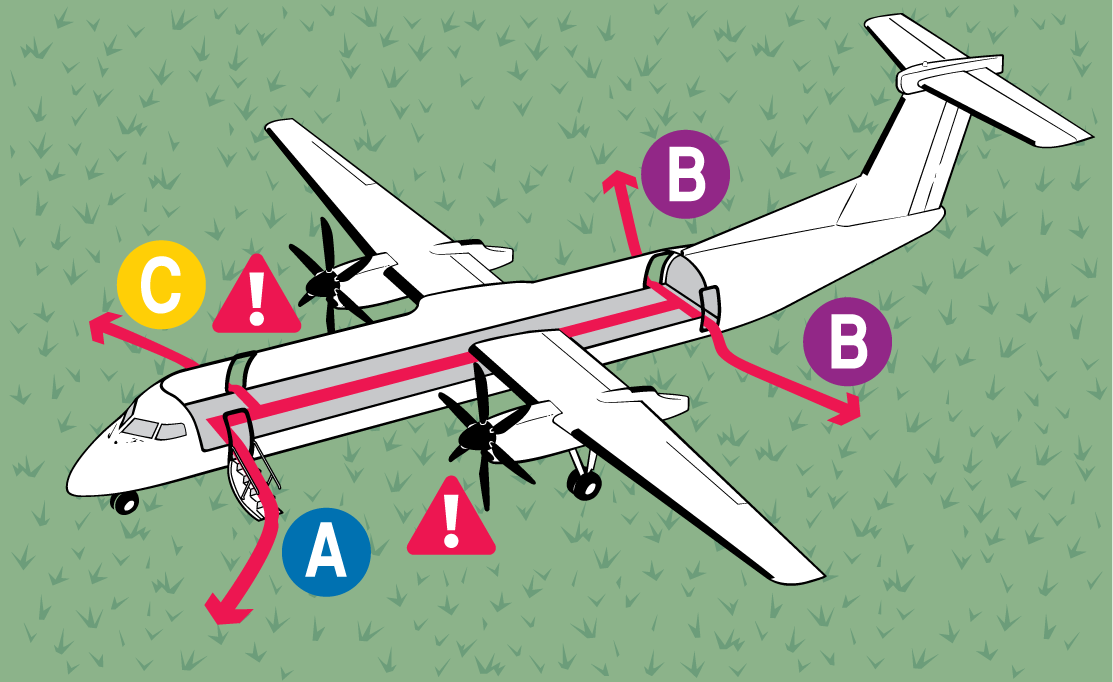
Aero Safety Graphics
Simple vs. Complex
Many aircraft systems and emergency procedures require passengers to rotate, pull, lift, tear, unsnap, fasten, or otherwise manipulate safety equipment. These actions require visual detail to be clearly understood. Yet many designers still favor simplified drawings, even though research shows passengers prefer realistic depictions.
Can you really show that an oxygen mask goes over the nose and mouth if your character has neither?
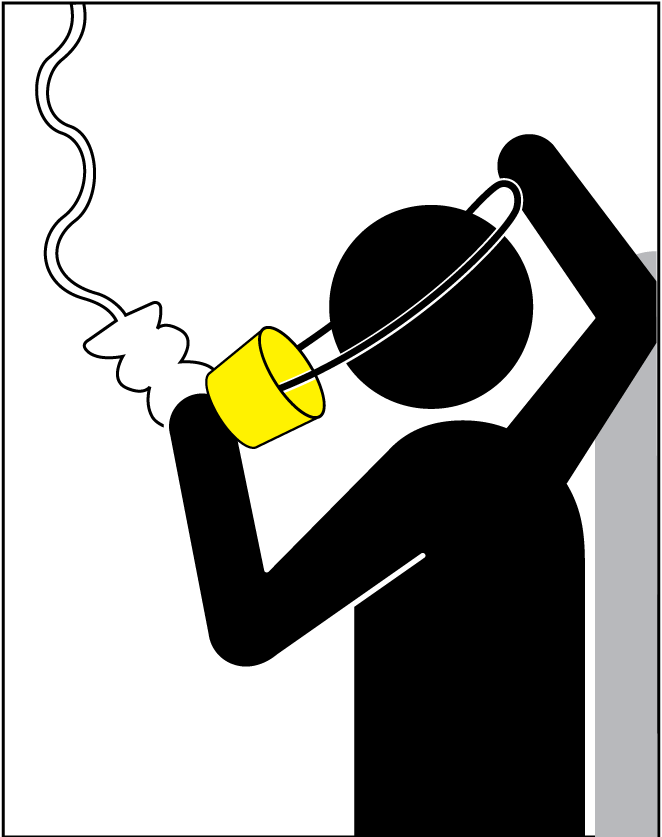
A Less Experienced Designer
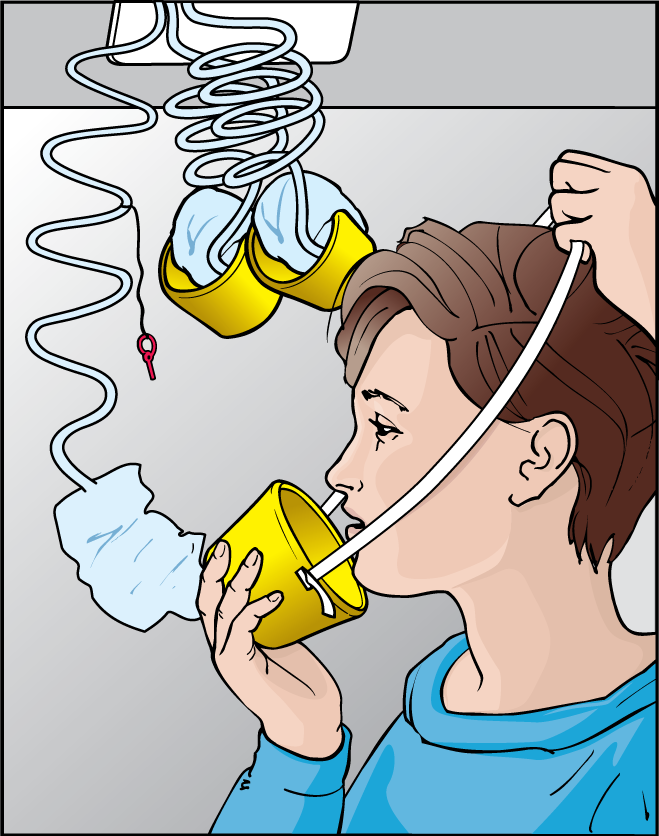
Aero Safety Graphics
Missing Persons vs. Showing the Passenger
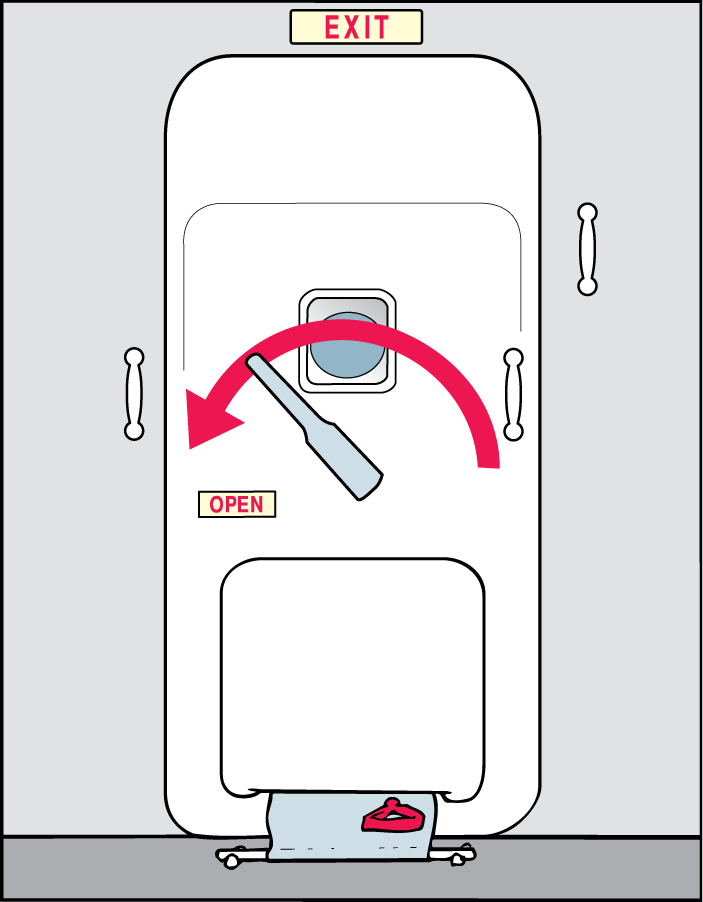
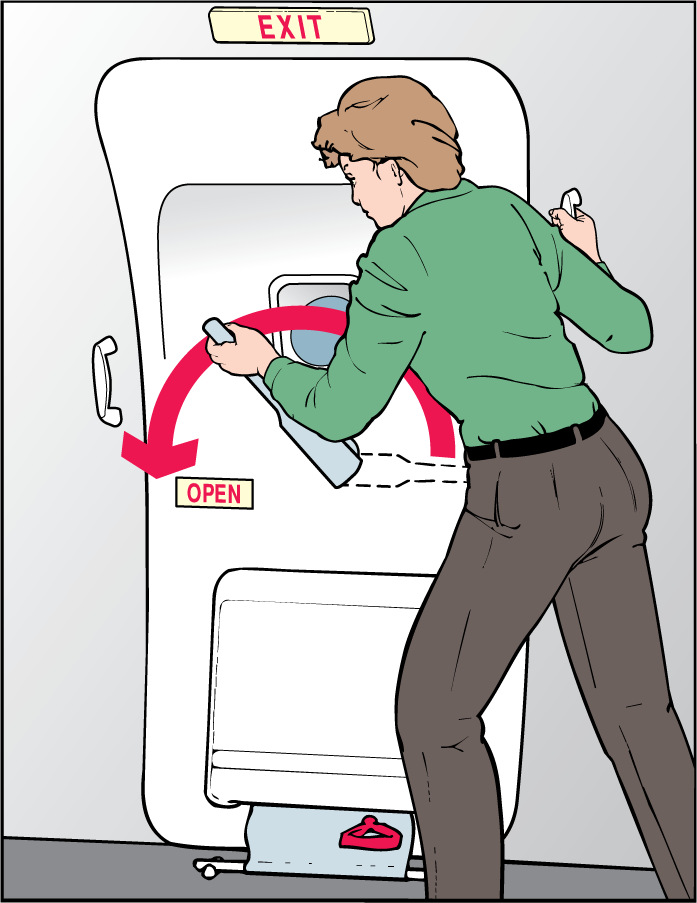
Some safety card illustrations leave passengers out of exit door drawings because the designer prefers a cleaner look or because an airline wants to discourage untrained passengers from opening the exits. We show a typical passenger operating the exit to reduce hesitation and behavioral inaction.
By including a person, we can demonstrate how heavy, awkward, or difficult the task may be, where passengers should stand, and which assist handles they should use. It also makes inexperienced passengers aware that the door does not open automatically like elevator, train, or subway doors do. In this way, it prevents passengers from wasting precious seconds waiting for a door that will not open by itself.
A Less Experienced Designer
Aero Safety Graphics
Mixed Messages
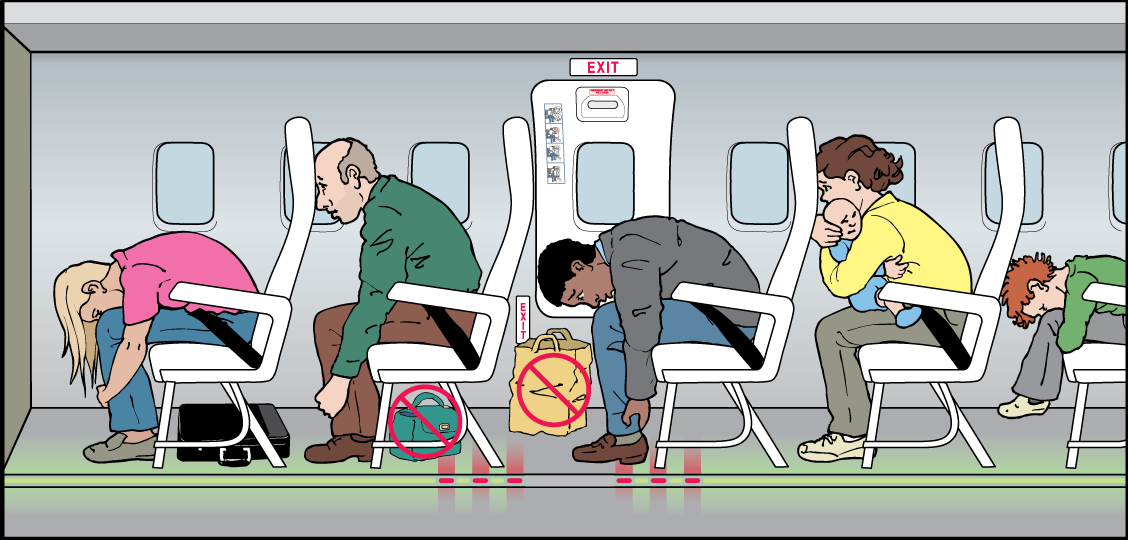
Some safety card illustrations combine multiple messages into a single drawing. While this may reduce the number of illustrations needed, research — including studies conducted by the FAA — has shown that combining too much information increases the chance that one or more important messages will be overlooked.
Knowing that emergency pathway lighting changes near an exit or that personal items should not obstruct an exit row are important messages. But the most critical instruction is how to brace — because if passengers do not survive the emergency landing, the other information has little value.
For this reason, we typically use separate illustrations for emergency lighting. We also do not typically address removing obstructions on the safety card because that message is communicated more effectively through placards or by a flight attendant's briefing of exit row occupants.
A Less Experienced Designer
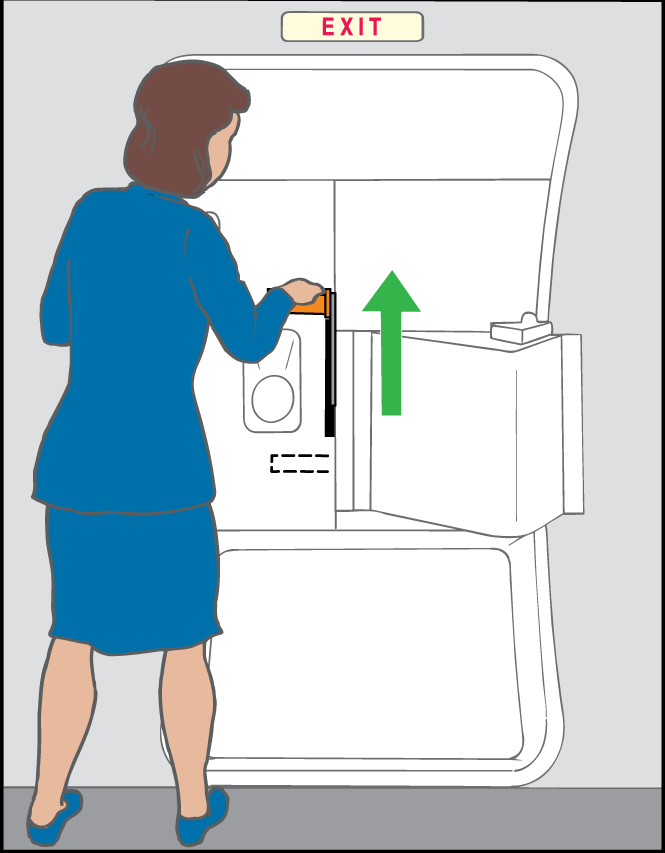
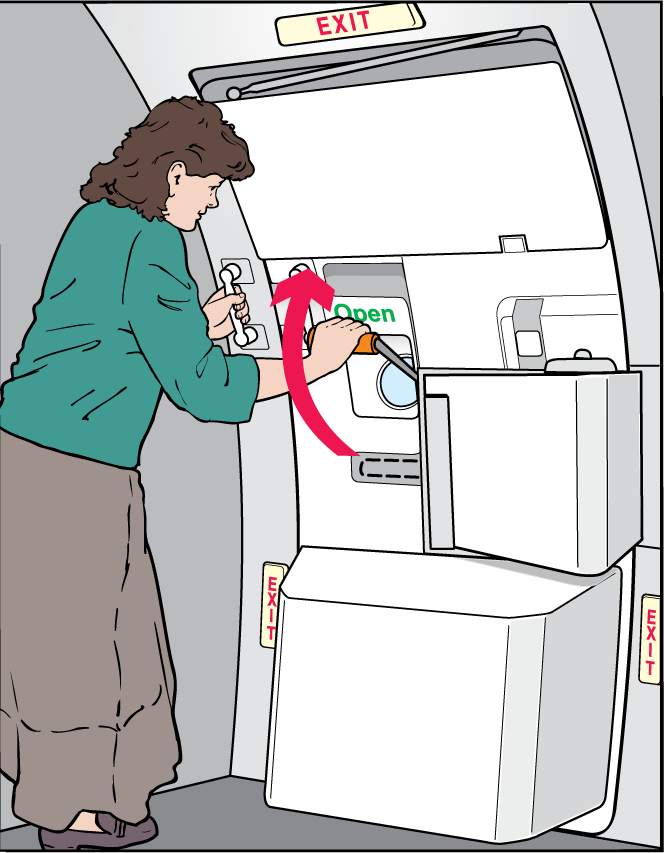
Many graphic designers like straight-on images (like the one below on the left), but that angle is often not as effective as a side view. In straight-on images, the character covers up important information, like her left hand holding the assist handle. By using an oblique angle, it becomes more obvious that she is raising the handle. We also show a typical passenger, rather than a flight attendant, operating the exit. This helps passengers understand exactly what they may need to do in an emergency and encourages them to mentally prepare to take action if a crew member is unable to assist.
Viewing Angle
A Less Experienced Designer
Aero Safety Graphics
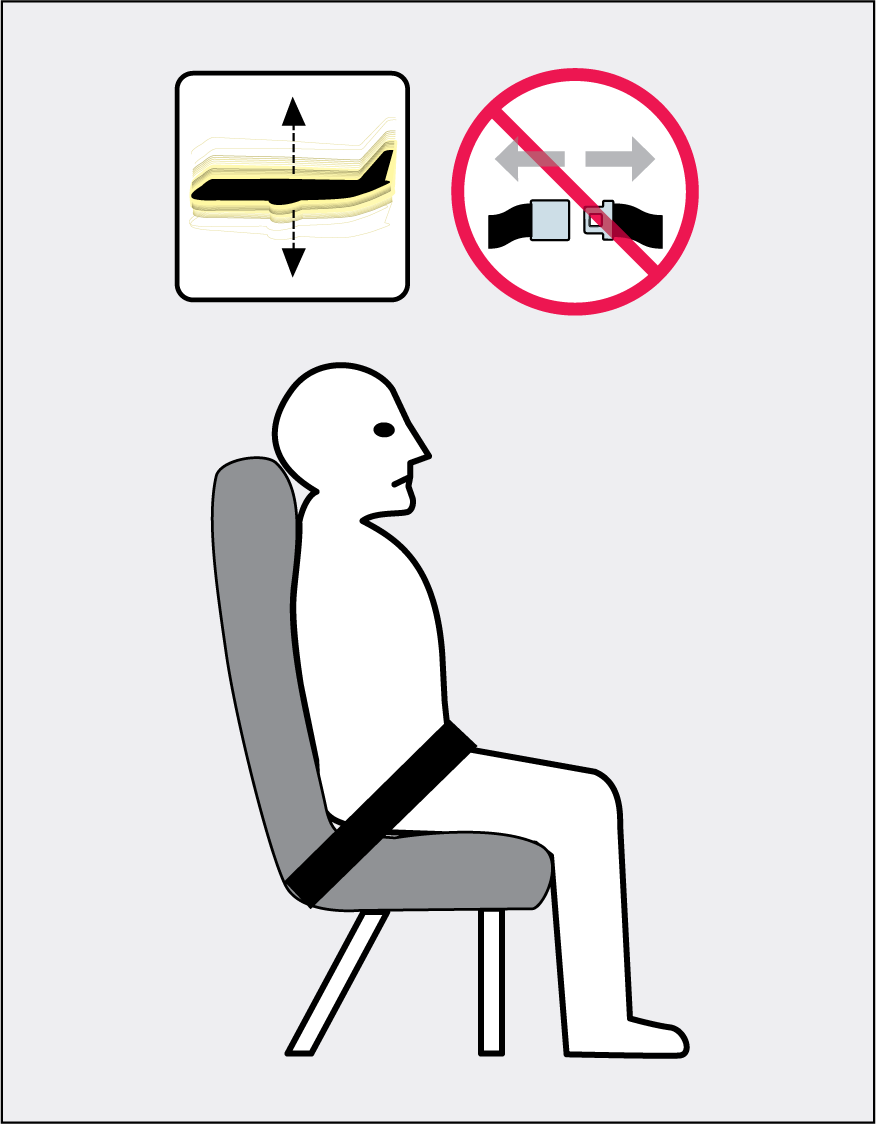
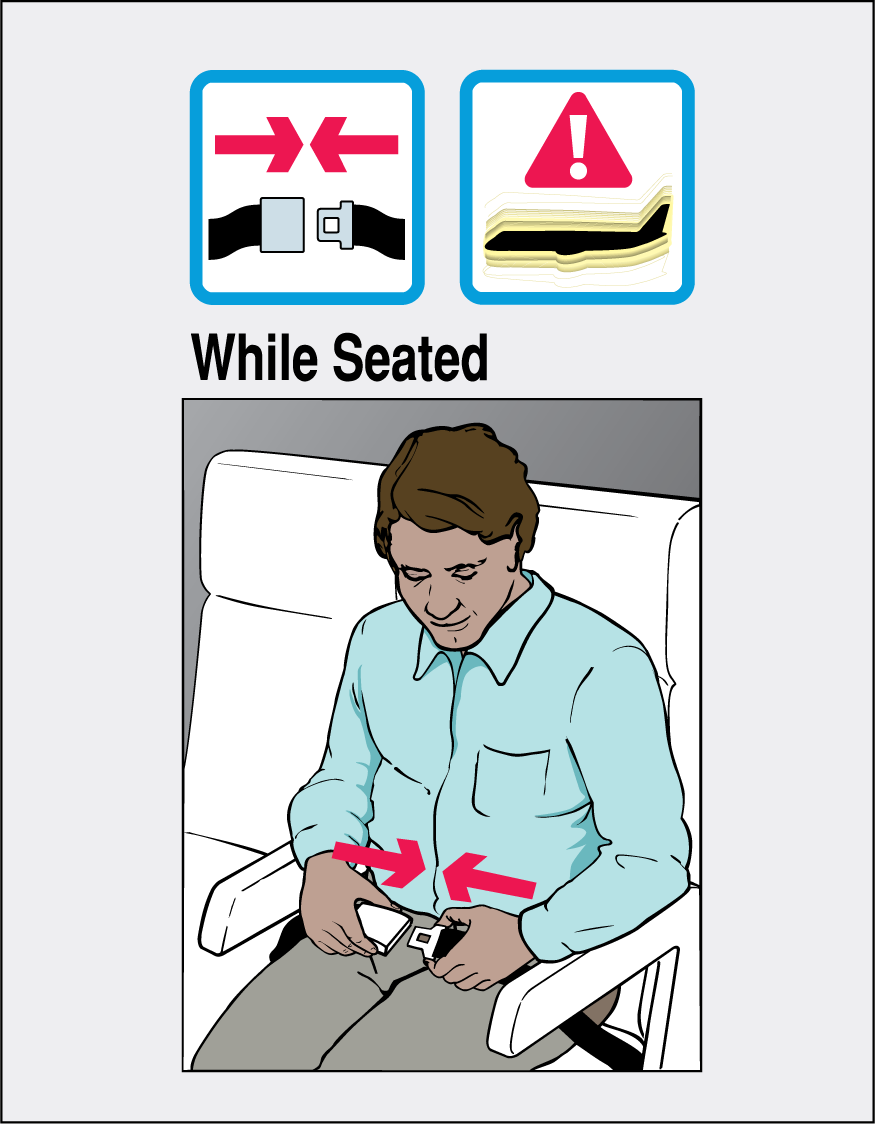
Turbulence is the leading cause of injuries onboard aircraft and can happen suddenly, without warning. But what is the best message to help protect passengers? We believe passengers should be told to keep their seatbelt fastened at all times while seated. Other designers instead tell passengers not to remove their seatbelt when turbulence occurs. Which approach do you think is more effective?
Seatbelt & Turbulence
A Less Experienced Designer
Aero Safety Graphics
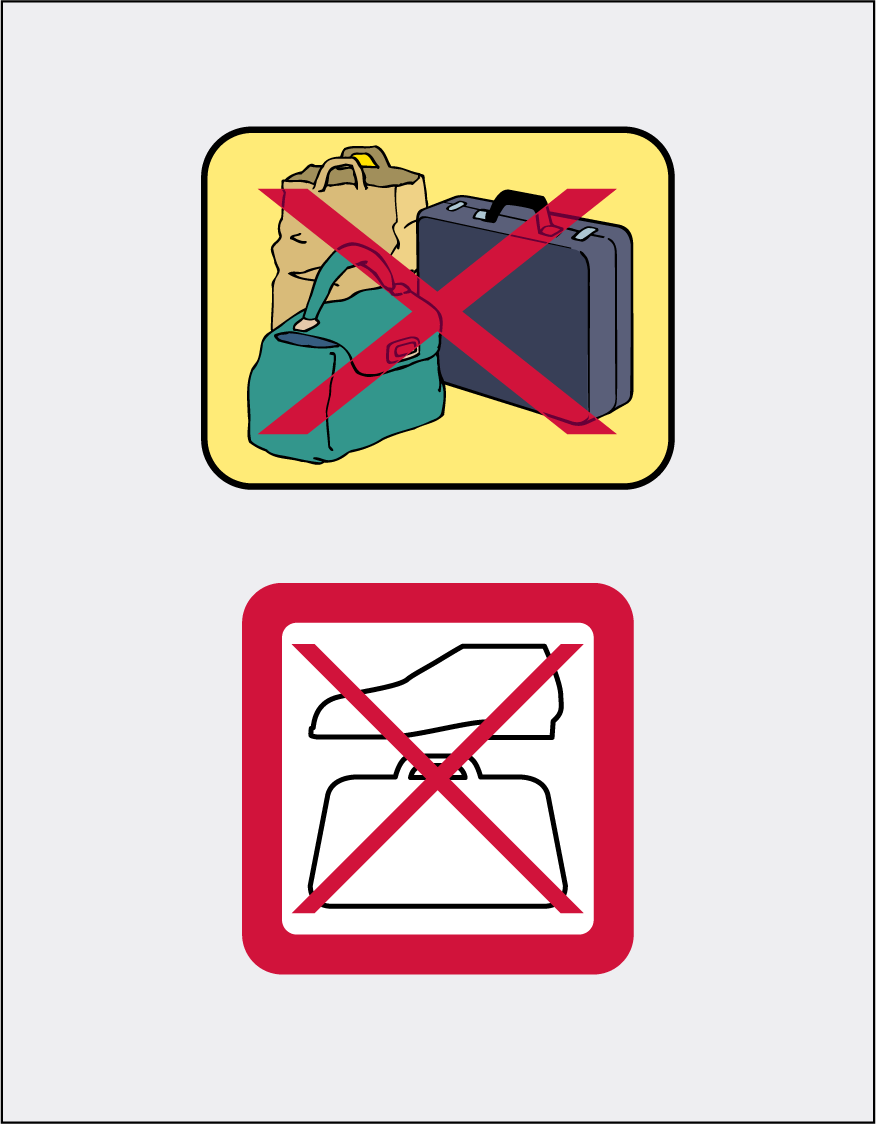
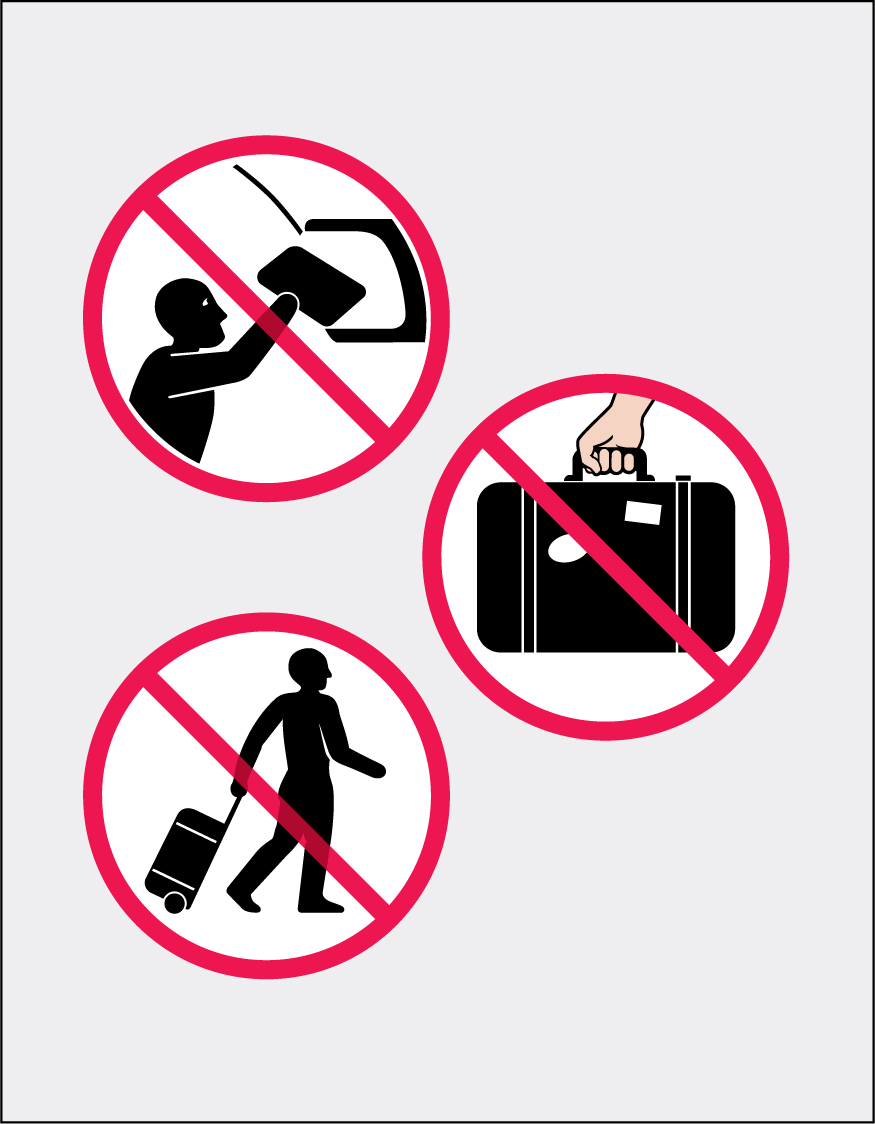
Carry-ons are one of the biggest challenges during an emergency evacuation. You might think designing a symbol to tell passengers to leave everything behind would be simple, but it isn't. There is no universally recognized symbol for all carry-on items, and poorly designed symbols can create confusion rather than clarity. Some designers show several items with a large X over them, but passengers may interpret that to mean, "Don't leave items on the ground." Others combine a "No Briefcase" symbol with a "No Shoes" symbol, confusing the meaning of both. Because this is such an important message, we have developed symbols to clearly communicate that you should not stop to remove, hold, or leave with personal belongings in an evacuation.
The Problem with Carry-Ons
A Less Experienced Designer
Aero Safety Graphics
These are just a few of the many considerations we apply when designing passenger safety cards. To learn more about the research, psychology, and design decisions behind effective passenger safety communication, read our founder Peter Bonneau's book, Instructions for the Unthinkable, and additional articles below.
These articles and publications by Peter Bonneau and Aero Safety Graphics explore passenger safety communication in greater depth, drawing on decades of research, comprehension testing, and hands-on experience designing safety cards for airlines around the world.
Further Reading
Rethinking How We Test Passenger Safety Briefing Cards
A critical look at comprehension testing, common testing pitfalls, and recommendations for improving how passenger safety cards are evaluated.
What Our Clients Are Saying
-
“Oh my gosh, you are incredible! Thank you so much. I sincerely appreciate the swift handling of this request.”
— Tyler Burton, JSX
-
"No changes from our internal review. Happy to proceed."
— Daniel Lambert, Glencore Nickel Canada
-
"We got the cards today — perfect timing before our final inspection."
— Haydar Kustu, Ascend Jet Travel / Wing Aviation
-
"I really like them! I like the front cover!"
— Kristi M. Sullivan, Air Transport International